
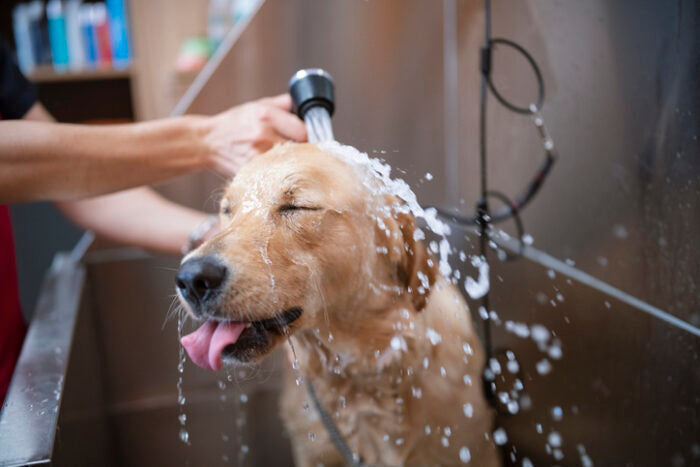
If you’re a hair stylist or dog groomer, your hands are your livelihood. They’re in constant motion—washing, scrubbing, rinsing, sanitizing—repeating the cycle dozens of times a day. While that level of cleanliness is essential, it comes at a cost: the gradual breakdown of your skin’s natural protective barrier.
Over time, this leads to dry, cracked, irritated hands that no amount of basic lotion seems to fix. And that’s because the problem isn’t just “dry skin”—it’s a compromised skin barrier.
The Real Problem: A Stripped Skin Barrier
Your skin barrier is your body’s first line of defense. It’s made up of lipids, proteins, and cells that work together to lock in moisture and keep irritants out.
For professionals like stylists and groomers, that barrier is constantly under attack from repeated exposure to water, harsh cleansers, antibacterial soaps, and chemical treatments. Dermatology research has shown that frequent handwashing and irritant exposure strip the skin of its natural oils, reducing its ability to retain moisture and protect itself.
In simple terms: your hands aren’t just dry—they’re damaged.
Why Traditional Hand Creams Fall Short
Most hand creams provide temporary relief by sitting on the surface of the skin. But if you’re washing your hands 20 to 50 times a day, that moisture is gone almost as quickly as it’s applied.
Even common workarounds, like wearing cotton gloves overnight, don’t solve the problem. In many cases, the fabric absorbs the product instead of allowing it to penetrate the skin—meaning you’re not getting the full benefit of what you’re using.
The Shift: From Moisturizing to Barrier Repair
Fixing damaged hands isn’t about applying more product—it’s about making sure the skin can actually retain and use it. That requires a different approach: restoring the skin barrier itself.
This is where breathable occlusion comes in. Instead of letting treatments evaporate or rub off, a breathable occlusive system holds them directly against the skin while still allowing moisture vapor to escape. The result is a controlled environment where hydration can penetrate, irritation can calm, and the barrier can begin to repair.
Why Beeswax Makes a Difference
At the center of this approach is beeswax—a natural ingredient that does more than just coat the skin. Beeswax helps create a protective layer that locks in moisture while supporting the skin’s natural recovery process. It also offers calming properties and helps shield compromised skin from external irritants.
For hands dealing with micro-cracks, redness, and constant exposure to chemicals, this combination of protection and support is critical. It doesn’t just hydrate—it reinforces and restores.
What Real Repair Looks Like
When moisture and treatments are properly retained against the skin, several things begin to change: hydration penetrates deeper, thickened skin softens more quickly, irritation subsides, and the skin barrier starts to rebuild itself.
This is especially important for professionals whose hands are effectively “reset” after every wash. Without retention, healing never has a chance to take hold.
A Simple Routine That Works
A practical approach doesn’t need to be complicated. After work—or before bed—apply your preferred moisturizer or treatment to clean hands. Then, use a breathable occlusive layer to hold that product in place and allow it to absorb over time. With consistent use, the skin becomes softer, stronger, and more resilient.
The Bottom Line
For hair stylists and dog groomers, damaged hands aren’t a minor inconvenience—they’re part of the job. But managing them effectively requires more than reapplying lotion throughout the day.
It requires ensuring the skin can retain and benefit from the treatments being applied. By focusing on barrier repair and proper product retention, it’s possible to move beyond temporary relief and toward long-term skin health.
Because when your hands are your career, protecting them isn’t optional—it’s essential.


Leave a comment
This site is protected by hCaptcha and the hCaptcha Privacy Policy and Terms of Service apply.